Friday, August 5, 2011

More on grandmotherdom, some on travelling and another bit on Peruvian elections

Daphne
OMG it’s been a looooooong time. The more things are happening to me, the less I seem to have to talk about.  The last time I stuck my head out of my mole hole was during Peruvian election time.  In the meantime we have a new president; I’ve been travelling; met my second granddaughter, Daphne, had considerable walking problems because of a tendonitis that struck unexpectedly and – as far as I can see – without obvious reason.  A bit like taxis which are sent by God to try us… 


Blossom


Plans for the near future
Where on earth do I start? Let me tell you before all else that I’m a happy old thing. My foot is better by now and I’ll soon go a-travelling again. Together with Hazel, one of my dear friends in London, we’ll ‘do’ Arequipa (hope we stay in a hotel with a view of Misti, the old volcano), the Santa Catalina convent and the Colca Canyon (where the condor flies) at the beginning of her Peru trip. She’ll be in Lima 29 August and we’re off on 3 September. While she’ll go on alone to discover Cusco and Lago Titicaca, I’ll be back at the ranch. I have to work on my second book blog, www.the-telling.com which isn’t even ‘under construction’ yet. Perhaps getting this here friendship blog up to date will inspire me? No good to have a book out nobody knows about…

Hazel will come back to Lima after her Cusco/Titicaca experience and we’ll be moseying about town for a while. There are so many wonderful things to do and places to eat. After a few days relaxing and being frivolous we’ll pick up our rucksacks and walking boots and fly to Trujillo and Chiclayo to see all those pre-Inca sites they’re digging up all over the place. Should be ok weather-wise. Right now it’s winter, September is still early spring here, and Trujillo (home of the wonderful Peruvian dance ‘La Marinera’ - http://www.youtube.com/watch?v=2Hjm9IfEuYY&feature=player_embedded#at=192 and http://www.youtube.com/watch?v=zR7UxLeZeYs&feature=related) takes us closer to the equator. I don’t think I could cope with Equatorial heat in the summer.  

That’s something you’ll always have to consider should you be planning a Peru holiday – what you’re going to do and where, and which part of the year would be the best time for the geography. In the summer (our summer, your winter) it rains in the Andes, and Cusco can be a very wet experience indeed. In the summer (our summer) the North can be too hot, and the rain forests can be unbearable – rain, mosquitos and humid heat.  July/August/September are the best months, but, of course, until the last days of August prices are up… up... It’s summer hols in Europe and the States.

Travels and tribulations
Where was I – or rather, where did I intend to be? Yep, I wanted to tell you about my travels, didn’t I. Some of you I managed to see, others not. Please forgive. This time my Achilles heel had me almost constantly in pain which meant I was walking as little as possible and it generally made me less adventurous and slowed me down. My ‘doctor’ has taken care of it by now. I was in such pain that I even went to my old doctor’s praxis in London, 100 meters from my old house.  Can you believe that – after over 20 years – they still had me on their computers? Gave me quite a jolt when they confirmed my address – my old home. Melancholic moments. What did they do? They printed out some advice regarding Achilles tendons from the internet. But they were very nice doing it. At least they didn’t make it worse. I avoid normal doctors like the plague. Something tells me that between them and the pharmaceutical industry they’re out to make me sick, preferable with something that’ll cost aloadofmonney to not make me better. I know. I’m exaggerating. But honestly, did that thought never strike you? At least for a fleeting nasty moment?

Daphne with Daddy
Daphne with Mummy
Between my old hip, crooked back and right heel I was a bit put out, especially since I had to be the girl-about-town in a big way. Apart from seeing friends outside of London (again, tube, bus, train)  my two children live at opposite ends of the world as London knows it. Demo, Saskia and Daphne, the new little one, live in South London. Effie, Blossom and I (in North London) took busses, tubes, trains, walking up and down stairs and endless connecting corridors. There I was limping along and feeling sorry for myself because I was in considerable pain all the time, while Effie took pushchair with baby under her arm and waltzed up those stairs like Supermum - faster than I could without baby. That made me feel quite defective.

Blossom with Mummy
We did do play parks and pub gardens, train journeys and family gatherings. Both babies are so very different. Difficult to see how they can possibly be first cousins. Both are beautiful (of course) and clever (of course). Also, right now, a 3.5 months age difference is enoooooormous. In a couple of years none of this will matter and I fervently hope they’ll like each other and become firm friends.

For those of you who know them: Marc Lomelí took me to the ‘new’ London, Canary Wharf and neighbourhood. We met at Waterloo Station, walked past the ‘London Eye’ (next year I’ll be on it!) to a Thames ‘water bus’ on which we headed south-west. Beautiful sun for most of the day and a terrific risotto at Carluccio’s. With Jane I met somewhere in Oxfordshire and when we’d finished our pub lunch we got ourselves lost on the way to Marc le Clercq, Iona, Louis and Clementine. All four in good health, happy and prospering in a beautiful new house.  Oxfordshire even brought a poem on. You may not particularly like the poem, but it describes aptly our experience that day:

Sunday by the Oxford Canal

We met at the station
and drove into the shire.
I’d forgotten how green wet green is.
Talking, catching up –
it's been a year.
Wasn’t really worth opening the brolly,
the rain came softly from all sides.

The pub, dark and low-ceilinged.
Right by the canal.
A fire lit.
Steak-and-kidney pie and a pint please.
We had planned to sit in the garden
watching the boats idling by.
Still, it was good.

At the next table sat foreigners
with loads of kids
all in brightly coloured slickers.
They said they were Finnish, had hired
a longboat for the weekend.

The tallest and blondest said, smiling,
We have a heat wave in Finland right now.

Germany
My home town is certainly changing. This was a nothing site before the once so conservative ‘town fathers’ commissioned Niki de Saint Phalle to come up with a fountain. Met up with my big brother. Last year that evil cloud from that unpronounceable volcano in Iceland wouldn’t let us get together.

British Museum
One of my ‘musts’ in London was the Afghanistan exhibition in the British Musem to which my friend Hazel invited me. I never had (or, rather, made) the time for the new and improved BM,  and after all the fuss in the British press about the new glass dome over part of the court yard I couldn’t stop admiring it.

Leaving London was a bit of a tearjerker for me – this time more than on other occasions. ‘My’ two babies first on the list, and reconnecting with those who befriended me when I was first married and had my own two children a close second, and…  All very emotional in the nicest possible way. You know what’s absolutely mind-boggling? When you see someone again after 30 years and they haven’t changed. Gives you ideas about yourself…
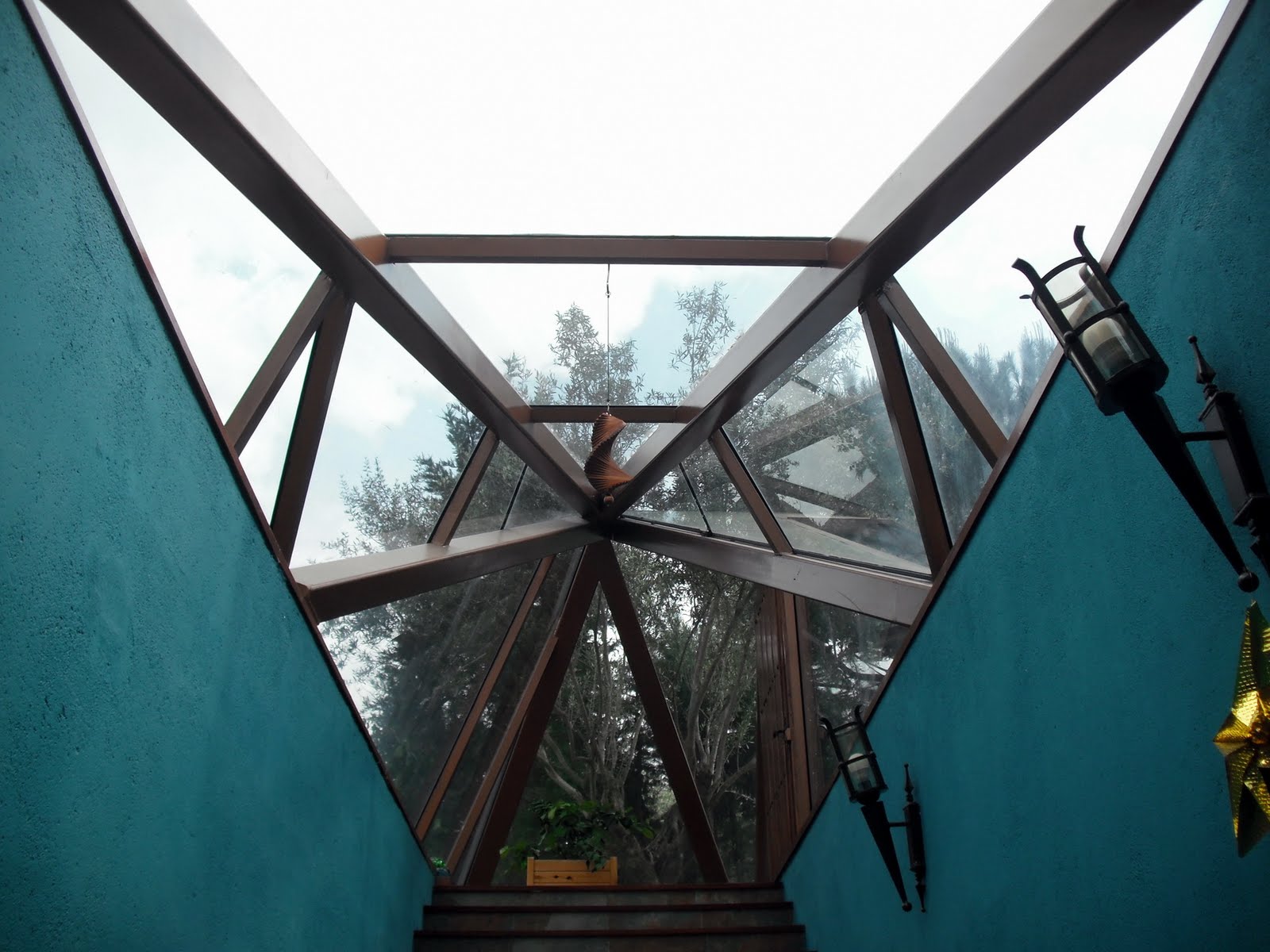
In Madrid I had to hobble around in the heat and finish the eternal ‘tramites’ – the bloody paperwork -and then I took refuge for my last two days in Lindy’s house, my wonderful New Zealand friend who has created an elfin stronghold in Peñascales.

The aftershock of my Europe adventure had me in its throes for at least three weeks. I blamed my foot, jetlag, exhaustion, emotional overload, even having felt ‘heavier’ in Europe as well as a host of other ills for my apathy. Probably a mixture of all of them. But sooner rather than later my old hard-disk started to function again and eventually I relocated properly.

A bit on Peruvian politics
On 28 June we finally had the long-awaited inauguration of the new Peruvian president Ollanta Humala. Even though he won by a small margin, it’s still a miracle that he won at all. It’s the first time in Peruvian history that a left-leaning candidate was democratically elected to lead the country. The choice in the end really was between a rock and a hard place. I suppose the hard place won out. Duh… No, seriously, Keiko Fujimori couldn’t possibly be the new president because the real man behind the throne would be daddy, who didn’t really distinguish himself in the democratic and honesty game. And the votes that made Humala president didn’t only come from the largely ignored masses of the poor in the huge and forgotten hinterland, but also from many of Lima’s intellectuals and those of the bourgeoisie who (I think) have an optimistic eye on the future. At one point everyone had to jump without knowing whether there was water in in the pool.  To this day we don’t really know, but we are beginning to get an idea that it's trickling in.

The majority of the Latin American heads of state were present as well as Don Felipe, the Spanish heir (without his missus). I took a few pix off the television. In one of them there were a hell of a lot of suits and I have no idea who they were. They can’t have all been secret service. The American president doesn’t have THAT many… looked like a convention of penguins.

The pundits, as everywhere, sit around tables in TV studios, getting paid well for propounding the same tired old theories which have been doing the rounds for yonks. But somehow I don’t think (perhaps one day I’ll be nailed to the mast of a sinking ship for this) we have to be worried about having opened the door to another dictator. Times have changed, the air smells different. Lula has been doing very well, and Castro has been struck by old age, his brother isn’t exactly made of the stern stuff, and Hugo has been smitten unexpectedly and will fade away. Slowly.  …the times they are a-chaaaaangin…

Humala has been sworn in with some controversy. I’ll quote from ‘Peru this Week’ (http://www.peruthisweek.com/), the brilliant English-language online magazine (I know they don’t mind the publicity I give them from time to time in my blog. Oh, by the way, the picture is also taken from ‘Peru this Week’ – don’t know where they got it from, of course):

“At 11:01 a.m. Lima time, Ollanta Humala became president of Peru. In the process, he caused quite a controversy.

In front of the Congress, his new cabinet, and foreign heads of state, Ollanta Humala swore to rule in the spirit of the Constitution of 1979. Members of the opposition jeered, demanding that he swear only on the 1993 Constitution, ratified by Alberto Fujimori and currently the highest law of the land.

Later, Humala's second vice-president, Omar Chehade, told AmericaTV that swearing in on the 1979 Constitution was a “symbolic act” and that it had no legal implications.

After swearing-in and receiving the presidential sash from Abugattás, Humala gave an inaugural speech which stressed social inclusion. He promised a uniquely Peruvian economic model, balancing economic growth, stability and inclusion. He also rejected both interventionist and laissez-faire economics, saying that the role of the government was to spur investment and growth.

Humala also promised new social programs, greater investment in public health, and an immediate increase in the minimum wage.

After the speech, Humala left the Congress and moved into the Government Palace, where he will reside for the next five years.”

Now ‘Peru this Week’ did something even better, they gave a short resumé of the two constitutions to enlighten the less informed of us expats wherein the difference lies:

The swearing-in of President Ollanta Humala the 28th of July in the Congress, invoking the Constitution of 1979, brought back his initial proposal of reinstating this document. In the midst of the discussion that this has generated about the suitability of such a move, it’s important to ask if the 1979 Constitution was better than the current one, passed by Alberto Fujimori in 1993, and to remember what each document proposes.

For the constitutional expert Jorge Avendaño, the first difference is in their origins. ‘The Constitution of 1993 has a spurious origin, because it’s the fruit of a de facto government (the government of Fujimori), its origin is flawed. Meanwhile, the 1979 Constitution is fruit of a Constituent Assembly…in terms of the origin, we could say that the second is superior,’ he said.

It must be recalled that the crafting of the 1993 Constitution was put in the hands of the Democratic Constituent Congress after [Fujimori’s] self-coup of April 5, 1992.

In terms of their rules, Avendaño mentioned that the 1993 Constitution is more favorable for investment, because it speaks of a more-developed market economy, though with some social themes. ‘It gives a lot of value to government contracts, it calls them legal contracts, which no one can change, for example, those related to tax stability…the tax contracts with the mining companies can’t be touched.’

About the 1979 Constitution, Avendaño considered it to be more oriented to the social and government spheres, and it did not establish restrictions on the state engaging in business activity. ‘That of 1993 is more pro-private business…it says that the state can form private businesses, but as a subsidiary, and only when the law allows,’ he said.

In the case of Humala’s proposal to create a national airline, he explained that there is no need for a Constitutional change, but rather just the passage of a law that allows it.”


So, there you have it. We shall see. But in the global climate of crises, wars, lies and corruption, we just might be on to a good thing here. I’ll keep you informed.

Just want to remind you that my new novel THE TELLING will be published soon. Here is a not quite finished jacket design. The type face for ‘THE TELLING’ and the back-cover teaser will change some (that's why I got rid of the present one). But  it’s more or less going to look like that. I’ll let you know as soon as it’s out. Would I not?

Those of you who read poetry from time to time may be pleasantly surprised by my collection TANGENTS, and those of you who haven’t made me rich yet by buying my first book, COMING UP FOR AIR, please do so.

To all of you a pleasant summer, happy holidays and, even if you don’t do what you love, try and love what you do. It helps enormously.

Until next time. I leave you with another po-im and a recipe:

Peru
Some of the highest peaks in the world,
Rainforests, deserts, vast empty beaches.
At four thousand meters your
heart jumps out of your chest,
your lungs give up.
The sweetest papaya, watermelons,
chirimolla. Avocados are palta here.
Fruit I’ve never seen before and
flowers woven from colours that
haven’t been invented yet.

I am making my home here,
but sometimes I wonder at
the strangeness of not
seeing the first cowslip
squeezing through the last frost.


I nearly forgot, another delicious recipe for one of my favourite Peruvian dishes:

Chupe de Camerones
(Peruvian Shrimp Chowder)

serves 6

Ingredients:

(Units: US | Metric)

    2 lbs shrimp, with shells and heads
    4 cups water (more if necessary)
    2 tablespoons olive oil
    1/2 small red onion, finely chopped
    1 garlic clove, finely chopped
    1 tablespoon aji panca chili paste (can substitute tomato paste if necessary)
    1 teaspoon aji amarillo chili paste
    1 cup peas, either fresh or frozen
    1/4 cup long-grain white rice
    1 -2 ear of corn, cut into 1 1/2-inch chunks
    1 lb russet potato, peeled and cut into 1 1/2-inch chunks
    1 teaspoon salt (to taste)
    1/4-1/2 cup queso fresco (can be Burgos in Spain), cut into 1/2-inch dice
    1 cup evaporated milk
    1 tablespoon fresh oregano, chopped
    3 eggs

And what to do with all that wonderful stuff:

NOTE for US and UK readers: Aji panca, aji amarillo and queso fresco can be found at Hispanic markets. You may be able to find the cheese at a well-stocked grocery store as well.

Remove heads and shells from shrimp, and refrigerate the shrimp. Put shells and heads in a medium saucepan, add water to cover, and bring to a boil over medium-high heat. Reduce the heat and simmer for 15 minutes.

While shells are simmering, heat the olive oil in a large flameproof casserole over medium heat. Add onion and garlic, and cook for 2 minutes.  Stirring. Stir in the aji panca (or tomato paste) and aji amarillo pastes. Reduce heat to medium-low and continue cooking (stirring often) for 10 minutes, or until onion is softened.

Puree shrimp shells and cooking liquid. Strain mixture through a fine-mesh strainer into a bowl and reserve the liquid (solids can be discarded). Measure out the liquid and add enough water to make 4 cups.

Add shrimp broth to onion mixture and bring to a boil. Stir in peas, rice and corn chunks. Reduce the heat and simmer for 10 minutes.

Add potatoes and salt. Continue cooking until potatoes and rice are just tender (approx 10 minutes more). Add shrimp and queso fresco. Simmer, stirring occasionally, until shrimp is just cooked through, about 4 minutes (shrimp should be pink).

Stir in the evaporated milk and oregano. Continue cooking and stirring. When the soup begins to boil again, crack the eggs into the soup, spacing them so they remain separate.( If you prefer, you can beat the eggs together in a bowl before adding them to the soup instead.)

When eggs are cooked through (or not quite so ‘through’ – depends on how you like them), your chupe is finished.


I'll be back with more from the Peruvian front in a month or so. I'll have new pictures from our trips. Be well. 

As always, I add a few of the photos I wanted you to see and which didn't fit into the text:

 
Fiesta in Arequipa


The 'culture traffic' outside the BM

My first view of the 'Eye' up close


Sunday, April 10, 2011

Presidential elections in Peru, the ‘Dry’ Law and Sir Paul in Lima

You can’t imagine the tension we’ve all lived in Peru during the last two months or so. No, not because Sir Paul is coming to Lima! It was palpable – even the taxi drivers would try and draw you out on which candidate you’d vote for. I say ‘lived’, using the past tense. That’s a lie. Right now, today (and probably for a few more days to come) we are in the process of living it.


Today, 10/04/2011, is Election Day. The doctor had drawn the short straw to be stand-by as ‘miembro de la mesa de votación’ = member of the voting table, in other words the guys who sit there behind the urn and make sure you do all the stuff you need to do in order to leave a valid vote, but he could 'escape'. Here it’s more than just ticking off your name on a list. Here, one of the most distrustful countries I’ve ever lived in (and I’ve come to believe with a certain justification) you have to leave your fingerprint behind, for example. That’s to stop people from coming back and voting twice. Well, I don’t know all the ins and outs of Peruvian elections because I’m not allowed to vote yet. I have my ‘residency’ but that doesn’t entitle me. One day should I go for the Peruvian nationality (as long as can keep my British one), I’ll put in my two ha’pennies' worth as well. I wish I could do so now.


Alan García, outgoing President of Perú
Peru doesn’t really vote for political concepts. There aren’t any. Short-term ‘parties’ are set up as they are needed. To create a proper party in Peru is very difficult and needs time and effort. Nobody every shows up, or at least not when they ought to, and they easily switch from one to the next. There is one party, APRA = Alianza Popular Revlucionaria Americana (American Revolutionary Popular Alliance). According to Wikipedia: “It is the oldest surviving political party in Peru and one of the best established. APRA is as much a social phenomenon as a political movement, with a membership whose loyalty to the party has been unwavering for several generations.” Even this is no longer true. They are divided, there is a lot of infighting, and they are at the tail-end of politics in this election. Probably all due to Allan García, the outgoing president who has been rather ‘naughty’ the way he circumnavigated and undermined the institutions and the law, often giving free hand to multinational money to exploit to their hearts’ content, unaccountable to anyone so as not to frighten big money away.


The Peruvians aren’t dumb, they see these things. It’s just that the State has not been interested in the rural areas, keeping the people without running water, without infrastructure, without asphalted roads, for example, to take their produce to market easily. One of the reasons why drug-growing is so much easier. If you grow tomatoes, let’s say, you may see them rot because there is no easy way to get them to market.


Ok, so far the ‘lecture’. I won’t bore you to death with Peruvian politics. But I have to explain that, for all those reasons and more, the Peruvian electorate (and it’s a mandated vote, if you don’t vote, you get fined) votes for personalities, old allegiances, empty promises – probably almost the same as everywhere else, come to think of it.

The 'Dry Law'
They have a law here that doesn't allow alcohol to be sold 48 hours before the election and on election day. So Barbara who came to lunch on Thursday with her handsome husband, Bernd, brought a case of Peruvian 'Pilsen' to make sure I didn't run out of the precious amber liquid in the run-up to the election. Exceedingly thoughtful, don't you agree?

We have to date five candidates with their ‘parties’ or alliances backing them. All five run very, very – uncomfortably – close.

The candidates


  1. Ollanta Humala, according to the surveys in the lead, is the candidate most urban Peruvians fear the most. Ex-military, he’s running for the second time and rumours fly has it that his money – at least the first time around – came from Hugo Chavez. He is supposed to be backed by the extreme left, and is supposed to have strong ties to Cuba. Since this time he’s been blowing not quite as hot as five years ago, people feel that the leopard may have changed his spots.
  2. Pablo Pedro Kuczynski (PPK), over 70, economist and twice minister in two governments, offers a (hopefully) humane conservativism. He was born in Peru but is of ‘gringo’ origins and the other candidates won’t let the electorate forget it, talking about ‘the American’. He did have various top positions in the States at one point and acquired American nationality. Big crime here. His father was a doctor and his mother a school-teacher. They came to Peru to help the poorest of the poor, each of them in their speciality. The young Peruvians seem to like him.
  3. Keiko (Fujimori) is daughter of the ex-president who is in prison for crimes against humanity (he did some state terrorism) and I’m not sure whether he was also condemned for shipping millions to his own accounts. What he did do (apart from two coups d'etats) was give the poor a sack of rice or two and/or a computer to buy their loyalty instead of creating jobs or making small enterprises and loans an easy option so that these people could begin to pull themselves out of their poverty. But the father’s gifts now grow votes for Keiko who says that 'yes, well, mistakes have been made in the past'.
  4. Alejandro Toledo was president of Peru from 2001 to 2006 and wants to repeat. He proudly calls himself ‘El Cholo’, a term which refers to his Indian ancestry, normally only used as a racist term. Alejandro Toledo in the mind of many Peruvians represents the native Peruvian but with a Ph.D. Although his lifestyle as president was frowned upon, they just may give him another chance.
Just in from Yahoo News:
Humala wins Peru first round vote, Fujimori second: exit polls
Left-wing nationalist Ollanta Humala won the first round of Peru's presidential election on Sunday and rightist lawmaker Keiko Fujimori had a slim hold on second place, three exit polls showed on Sunday after voting ended.

All candidates have promised if not to pacify ’foreign investors’ at least not to frighten them into leaving, with some promising the sky to the poor - promises they won’t be able to keep in the long run. So here we are. Today is the day. And I’m not sure when we’ll know how the electorate voted, but your papers will carry the news also as soon as it's known. Let’s just hope it all passes without election fraud – it wouldn’t be the first time.

There will be a second round, a play-off between the two winners of today's elections. The biggest fun is still to come.

Even the shamans got involved with rituals around the election posters - see pic on the left.


With Sir Paul (McCartney - if anyone wondered) coming to Lima soon, all will be well anyway. He announced his coming in a kind of Spanish. Ouch...! The most expensive VIP tickets sell in the region of 1,200 US Dollars and apparently more than half have already been sold. Talking about the hungry...


And talking about a country of profound distrust: when you come to visit and go shopping in the big department stores, don’t be offended when they want to see your receipt at the exit and snoop through your bag to make sure you haven’t ‘disappeared’ anything.


I finished my second novel, THE TELLING, and the publishers have accepted it happily. It’ll come out either end 2011 or first month 2012 – exactly one year after the first one. My collection of poetry, TANGENTS, is about to be published, if not in April, then definitely before June. I’ll let you know.


The Japanese earthquake affected us little in the end, even though it affected the whole world tremendously in real terms. Even though they said we’d have tsunamis, it wasn’t much, but the Peruvians didn’t take any chances and made sure as best they could that people were protected. The wave that hit the north of Peru, in the region of Tumbes, was about one meter and a half (enough to cause grief for those who live near the water’s edge) and here in Lima we had a slight increase of about 25 cm. They had been worried about a tsunami especially in the port of Callao. Understandably.


I haven’t been up to much recently, so have ‘nothing to declare’. Have been writing, photographing, drawing... I’ll be in Madrid, London and Düsseldorf between 23 April and 23 June. So I’ll be more or less incommunicado, even though I’ll hit Internet Cafés on a regular basis. Can’t wait to see my children and my granddaughters.


Oh, I nearly forgot. Promised to include regularly Peruvian recipes, didn’t I? Ok, here is a good one, easy to make, great to eat:


Warm Chicken Ceviche


Ingredients:


• ½ chicken or 2 chicken breasts, cut into pieces

• Oil

• Salt

• Pepper

• Cumin

• 1 table spoon of mashed garlic

• 2 table spoons of fresh yellow ají (paste or puree). If you can’t find ají you can use other hot spices, especially chillies will do

• Juice of about 2 limes or one lemon

• 1 onion cut into very thin slices (type julienne)

• A handful of finely chopped fresh coriander


Preparation:


Heat oil with salt, pepper, cumin, garlic, and the fresh yellow ají or chilli paste. Add the raw chicken pieces. After the chicken has browned a little, add ¼ cup water and let the mixture cook. When the chicken is tender add the onion, lime juice and chopped coriander (unless you hate coriander, of course). Cook a few minutes more until the onions are tender. Remove from heat and serve.


Serve with boiled potatoes and white rice. 3-4 servings.


This time it pleases me immensely to be able to leave you with some of the best lawyer jokes I’ve come across recently:


Q. Why won't sharks attack lawyers?
A. Professional courtesy.


Q. Why is going to a meeting of the Bar Association like going into a bait shop?
A. Because of the abundance of suckers, leeches, maggots and night crawlers.


Q. What's the definition of mixed emotions?
A. Watching your attorney drive over a cliff in your new car.


Q. Have you heard about the lawyers’ word processor?
A. No matter what font you select, everything comes out in fine print.


Q. What do you call a smiling, sober, courteous person at a bar association convention?
A. The caterer.


Q. How can you tell a lawyer is lying?
A. Other lawyers look interested.


Q. What's the difference between a bankrupt attorney and a pigeon?
A. The pigeon can still make a deposit on a Mercedes.


Q. What's the difference between a lawyer and a terrorist?
A. You can negotiate with a terrorist.


Q. What do honest lawyers and UFOs have in common?
A. You always hear about them, but you never see them.


Q. What's the difference between a lawyer and a vulture?
A. Lawyers accumulate frequent flyer points.


Summer has gone. It's autumn now, and with autumn has come the Lima 'marinade', a permanent mist that settles over the water. That's why I include some of my more spectacular skies for this season (during the first days after the Japan earthquake).


Until July or so ... when I'm back and it's my winter.

Monday, February 14, 2011

A rant... a po-im and a recipe!

The story of David and Goliath has recently hiccoughed up (hiccoughed up? ...never mind) with me on various occasions, feeling very much like David yet wanting to change the world. I mean, really CHANGE the world. I no longer want to hear about ‘THE crisis’ (which doesn’t seem to concern the big guys at all, those that landed us in the gunk in the first place), I feel less and less able to look at those pictures of hungry kids with bloated bellies, or at ‘killing fields’ all over the globe – usually where people have had a hard time anyway. I no longer want to read about people losing their homes, forests being sold off to Chinese (or any other) investors so that the national debt may be fractionally less, or selling the mining rights (as in my new home country) for the sake of national income growth to those who are no longer allowed to follow their business at home without cleaning up after themselves. That costs money, doesn’t it, but you can still shit on those who don’t seem to have a voice yet. Well, they may have one, but aren’t allowed to use it. After all, who are those people in funny clothes who say they want to protect their rainforests, rivers and their children? They stand in the way of progress and in the way of a nice fat package stuffed into the pockets of the facilitators... When they try to get together to have a collective voice, they are very soon made to regret it and feel even more powerless.

I got so upset I even wrote a poem about it:

Bagua


When your children
ask with big eyes,
shadowed in their sunken sockets,
tell them that a new hunger
lies on the altar of sacrifices
and that bodies are floating
upstream,
threatening
your president’s daughter’s patrimony
by contaminating
the terms
of a new free trade agreement.

Go on, dream of oil wells,
gold mines and jungles,
and new plastic roofs.
Your benefactors
will soon deal harshly
with those who corrupt
the people
and make them believe
that progress
is not inevitable.

Mercury laps at the black
shores of the Rio Mantoro
en route to the Ucayali,
rolling with its last lazy move
into the mighty Amazon.

You won – for now.
Far away
your saviours
are pushing  a new model plan
that looks remarkably like the old one.


When I was very young I had an obsession with something called ‘justice’. What normally meant that I was still out fighting the dragon when the others had already long since settled for less. Silly me. I soon learned to shut up and let things happen the way the majority seemed to like it, just asking myself from time to time, can it be that the majority is always right because there are mor of them? 

Now, that I am getting on, my feeling for ‘justice’ hasn’t really changed at all, and I no longer want to shut up. Still, I have resigned myself to the fact that the justice I am thinking of probably doesn’t or can't exist. For example: putting people away 'at Her Majesty’s pleasure' in general ought to be called ‘punishment’, not 'justice' – in the minds of many it may be more correct to call it ‘revenge’ (an eye for an eye?) ‘He’s got to pay for his crimes, doesn’t he...’ is that helpless refrain.

Of course we have to protect ourselves from those who would do us harm, and I don't profess to have any answers; but we have applied the system we have for an awful long time and things got worse instead of better. So perhaps we MUST rethink. For example, if we were to get away from the victim and perpetrator mentality, we could begin to start a ‘just’ system? What I mean is (and that’s not my idea, a hell of a lot of very clever people have come to that conclusion too) that the perp is a victim too, victim of whatever has been done to him/her... and so go back along the line. Treat the victim as well as the perpetrator and perhaps we begin to get somewhere. I am just frustrated and I can’t postulate here my hypothesis, especially since I’m no expert. Trust the experts, I say, they charge the most.

At least the good doctor is making a beginning here in Lima, trying to catch the abused and abandoned kids and trying to give them something to live towards (for example, self respect, dignity, belonging ...). He can only start small, but he’s on his way. In the States he found a few good people of outstanding qualities who are equally determined that things should change. I am his most ardent supporter and pray that they get the funds and the governmental support (part of that has been achieved) to make it happen. We can’t just sit here and feel that little Davids can’t do anything against all those Goliaths out there. All it needed was a hard little stone in a clever sling and the sharp eyes and daring hands of David and, voilà, Goliath had a kind of permanent problem. I wish ‘my’ doctor God’s speed on his way to making dents where they are desperately needed.

Speaking of David, I see little David’s all over the place in Lima. Lima is on a building spree.
They’ve discovered the wonders of quick construction money (remember Spain?) and it’s often Spanish contractors who have found a place to continue what they can’t do any longer in Spain. So the living machines are going up... and every so often you see one of those little guys still sitting tight – it’s a sight for sore eyes, it is. However, I fear that when auntie dies or granny or... the heirs will soon sell their spot of real estate to retire with a nice little pouch full of this stuff called money, and another building will go up. There are a few, but one in particular has a place in my heart (and my camera) and I watch it and wonder...

That’s the down side. On the up side you get an increasingly good-looking, modern-looking Lima which in turn allows it to feel more self respect, and – since perceptions are our reality – the investors come and look and are impressed and invest... and they are right. Peru rocks – I said it before. And it does so in many ways: I believe they are even beginning to try and clean up their corruption act. The right noises come from the most surprising quarters, and I can only repeat that things have to start somewhere, start small, tiny voices together can make a big voice and the result can be astonishing.

Just look at Egypt. I don’t know whether it’s a good thing or a bad thing that Mr Mubarak disappeared himself with all that money (we presume he did), I have no idea whether he was a good or a bad boss for his people, how can I judge... but they were obviously unhappy with him – and 30 years IS a long time – and they managed change. Whatever that change may bring, many little voices got brave and began a trickle, then a flow, and from a mighty river soon a tidal wave sprang. Let us learn from the Egyptians who don’t even know what’s coming – they just knew things had got so bad that they clamoured for the relative shirt. You never heard of the ‘relative shirt’? We all have them. When all your shirts are dirty and you have no shirt to wear you go to the dirty-washing basket and pull out the relative cleanest.

Oh dear, today has turned into far more of a rant than I intended. But, there you are. You can always click on that little cross in the right-hand corner.

Now to something completely different:
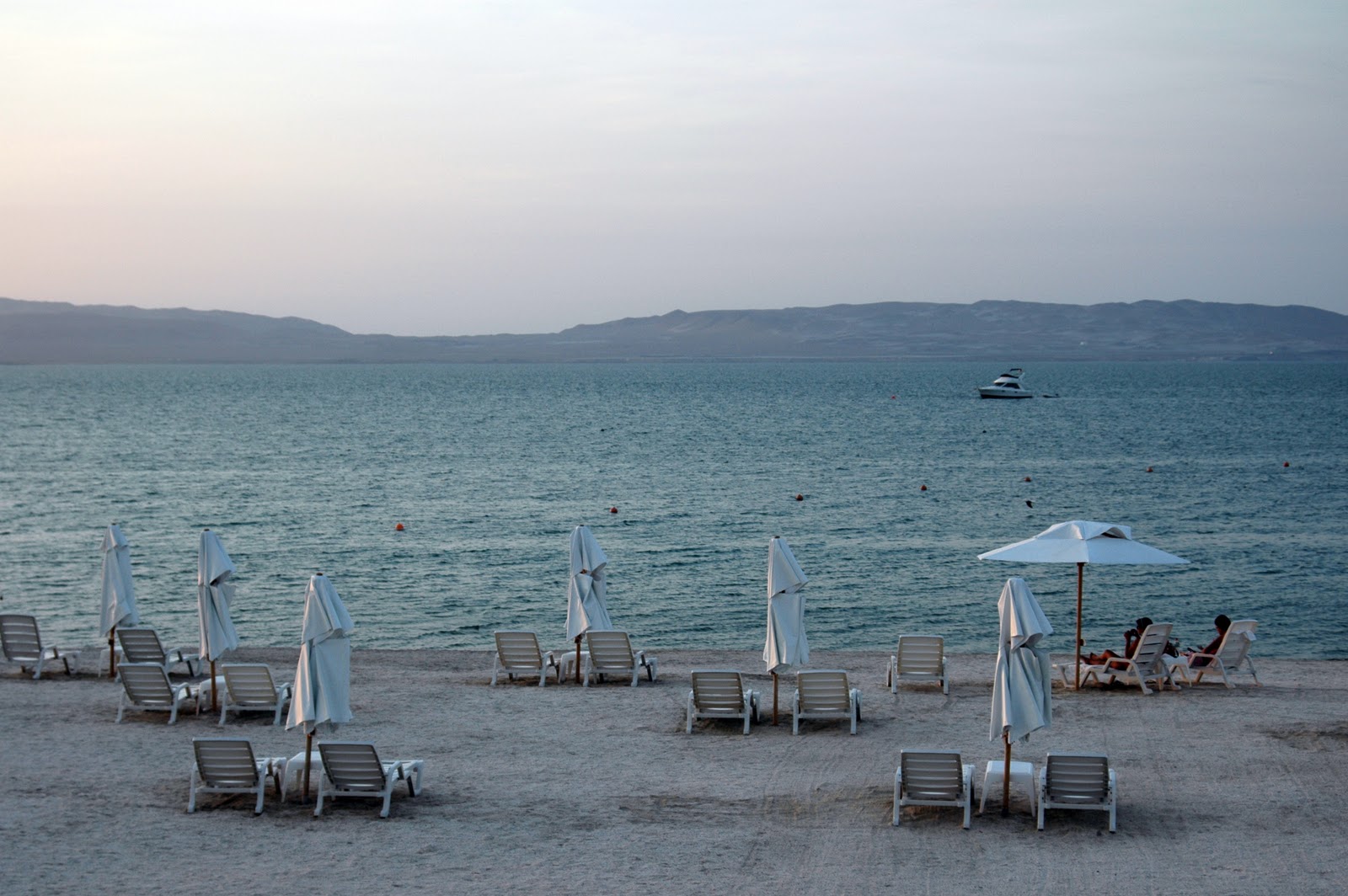
Lucho’s cousin, Dr Alberto, came from Florida with his missus, and we went south to where the sea lions and the birds live. Near Paracas you find the Islas Ballestas, our Galapagos, in a way. In the Doubletree Hilton we were in for a bit of luxury and from there we excursed. The Paracas peninsula looks as though nothing could possible grow and thrive – apparently it’s one of the driest places on earth and the landscape is barren – but out there the ocean is teaming with life. The Humboldt Current, the cold brother of the Gulf Current, meets up with the warm off-coast currents and produces plankton and other goodies (not to mention bigger versions which end up on your plates – absolutely fresh and totally delectable).
  
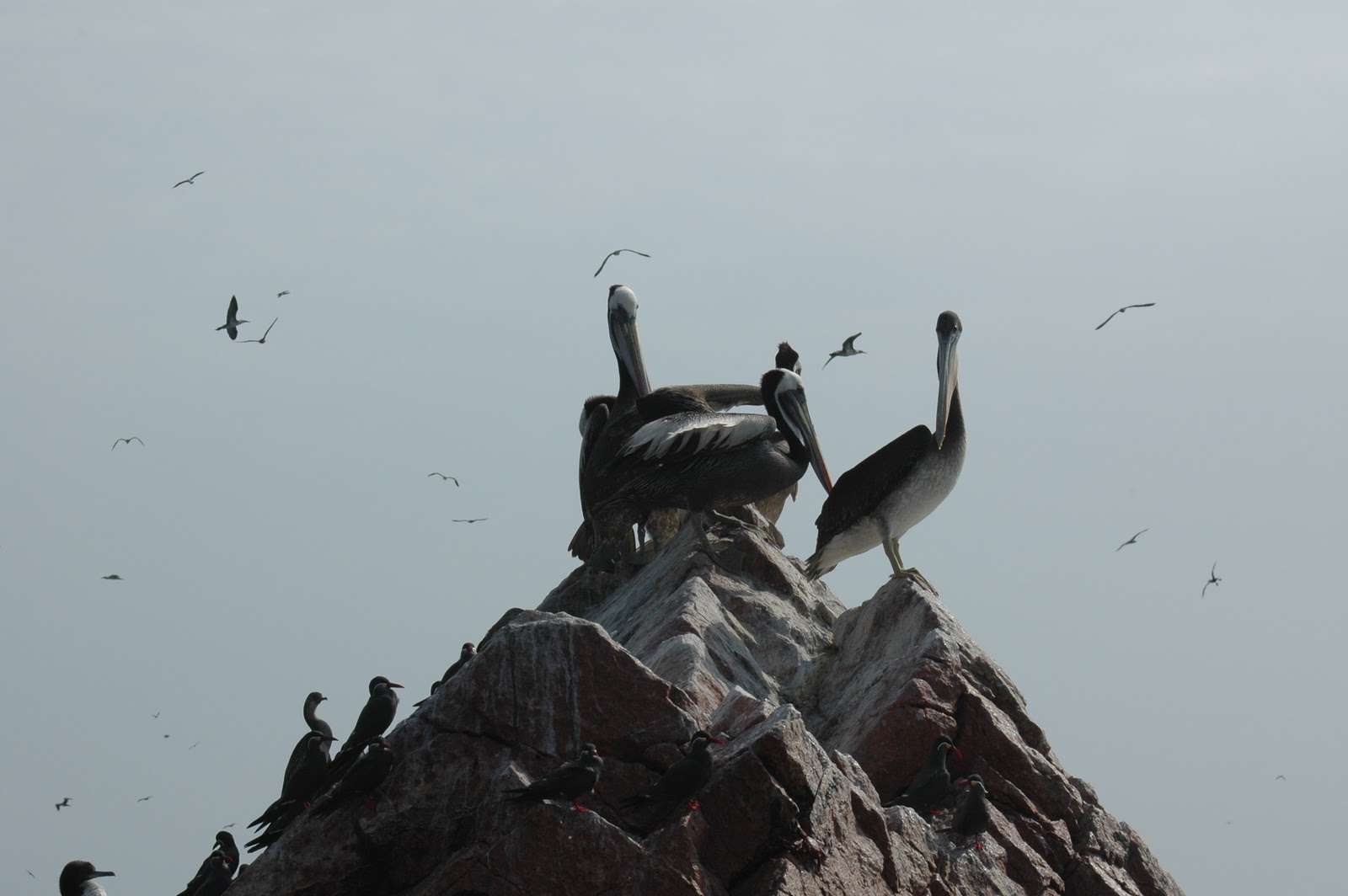
On first approach you can see a rock totally covered in little black dots – those are birds, and we were told that on the Ballestas islands about 227 different species of birds have made their home. The biggest, the pelicans, seem to be the mafia there. The others just hang about and do their stuff. We even saw some little Humboldt penguins, all waiting for the same boat. I wonder why they all look in the same direction. I thought they only do that in the zoos. The place stinks, that’s true, but you don’t care. What is a little bit of honest-to-goodness guano (from the Quechua 'wanu', via Spanish) smell in the face of nature’s wonders. Then there are the sea lions. One of the bays is the maternity ward, and the mums are fiercely protective of their little ones. The dads aren’t quite as nice as they seem from afar. We were told they aren’t that protective of the babies but very keen to get back with Mrs. Sea Lion – some area of conflict, obviously. They don’t smell that nice either, and when the boat got into – or rather under – the rocks, their ‘barking’ echoed back from the rock walls and, together with the sounds from the millions of birds, you got quite a rock concert... Booooooh, I am sorry, couldn’t resist.

Just as in Lima, in the winter you get that enormous cloud (officially known as garúa, the coastal fog) which I have already mentioned and which brings a bit of moisture and makes some rather courageous plants grow from season to season.

You can find Paracas when you are looking for Pisco, Ica or even the Nasca Lines which are a
bit further still. Paracas is on the way. And Paracas even has its own unexplained lines: on the little Isla Candelabro (one of the Islas Ballestas and so called for the giant mystery ‘drawing’ which resembles a candelabra. Well, there is that, but it may also represent the mighty Browningia candelaris, the mighty cactus from which some interesting juices can be extracted – or so I’ve heard.

All in all, it was an astonishing trip in every way, and full of unexpected pleasures. I am determined to repeat it, and it’s only about four hours by car from Lima along the Panamericana Sur.

News from Peru?

  • There is a bit of an overkill as far as election messages are concerned. The Peruvians will soon have a chance to vote for their next president and the candidates are doing their best to make everybody yawn. Now that Peru is on its way economically speaking (at least that’s what it looks like and it appears to be relatively solid if the world doesn’t change profoundly) they are trying to get to grips with Peru’s human beings. Do we agree with abortion? May gays form a legal contract? (They all emphasise that they are in no way talking about ‘marriage’) Do we legalise drugs? (Drug use itself is not yet a criminal offence which is a good thing because it keeps people with problems out of jails – only they don’t offer alternatives either.) Are we against corruption? We’ll see. The elections will take place on 10 April 2011, that’s not a very long wait. I’ll keep you posted. 
  • Climate change has hit those wonderful  and cute alpacas. About five percent of the 35,000 alpacas around Arequipa died of cold. Apparently it got to just over 1º and especially the most vulnerable of the alpacas, expecting mums and babies, died of pneumonia. 
  • Sting is coming to Lima and the most expensive seats were sold at 1,000 US$. 
  • Peruvian food is getting more and more attention worldwide. Just consider that Ferran Adrià, a Spanish chef considered among the best in the world, a short while ago waxed lyrical about it at Madrid Fusión. El País, one of the major Spanish newspapers, devoted a six-page colour feature to Peruvian cuisine in its OnMadrid section. 
  • Still talking about food, if the rate of chronic malnutrition is one of the indicators of a country’s development status, Peru is slowly getting there. From 2007 to 2010, the national level of chronic childhood malnutrition fell by 4.7 percent – from 22.6 to 17.9 percent according to a press release issued by INEI, the country’s agency for statistics and information. It doesn’t seem much on paper, but it’s an important about turn.

Did  I tell you that we (in Lima) have a park just for lovers? Isn't that nice? They even created a ginormous statue of two lovers just to make their point. Well, it's somewhere to go when you live in tiny flats or houses with a large family and no privacy. Some couples come back to where they first met and smooched the day they get married and take photos. There'll soon enough be a number of kids to reminisce with.

What I considered doing from now on is to add a recipe for a Peruvian dish from time to time so you can try your hand at what everybody is talking about. Let’s begin today with one of the staples of every day – well, once every week perhaps – Ají de Gallina:
 

Ingredients:
•    1 big chicken
•    8 cloves of finely chopped garlic
•    1 branch of celery
•    1 bay leaf
•    1 carrots cut into 4 pieces
•    2 finely chopped onions
•    a little pepper
•    salt to taste
•    6 slices of white bread soaked in about ¾ cup milk
•    50 g or 2 tablespoons of ground pecan nuts
•    1 kg (2.2 lb) white cooked potatoes
•    50 g or 2 tablespoons of Parmesan cheese
•    ¼ cup of oil
•    10 black olives
•    3 boiled eggs
•    parsley
•    ½ cup milk (optional)
•    150 g or 6 tablespoons fresh ají (there are places where you can get it or similar)


Preparation:
Cover the chicken in hot water and boil the chicken for about 35 minutes together with the celery, the bay leaf, the diced carrot and salt until tender. Put aside the broth (1/2 cup). Let it cool a bit then shred the chicken.

In a separate pan fry the chopped garlic, the onions, and the ají with a bit of pepper until the onions are transparent. Add the bread you soaked in the milk and stir. Add the chicken broth. Add a little more milk if necessary.

Add to this the shredded chicken. Stir well. Add salt and the ground pecan nuts.

Place the chicken in the center of a serving dish, add some cooked potatoes (sliced) and sprinkle it all with the Parmesan cheese.

Garnish with olives, boiled egg (cut into halves) and parsley.

Serve with white rice.


I leave you with an appetite and some of those international English-language gems (they must make some of these up):

In a Tokyo Hotel:
Is forbidden to steal hotel towels please. If you are not a person to do such thing is please not to read notis.

In a Bucharest hotel lobby:

The lift is being fixed for the next day. During that time we regret that you will be unbearable.

In a Leipzig elevator:
Do not enter the lift backwards, and only when lit up.

In a Paris hotel elevator:
Please leave your values at the front desk.

In a hotel in Athens:

Visitors are expected to complain at the office between the hours of 9 and 11 A.M. daily.

In an Austrian hotel catering to skiers:
Not to perambulate the corridors in the hours of repose in the boots of ascension.

On the menu of a Swiss restaurant:
Our wines leave you nothing to hope for.

On the menu of a Polish hotel:
Salad a firm's own make; limpid red beet soup with cheesy dumplings in the form of a finger; roasted duck let loose; beef rashers beaten up in the country people's fashion.

Outside a Paris dress shop:
Dresses for street walking.

In a Rhodes tailor shop:
Order your summers suit. Because is big rush we will execute customers in strict rotation.

In an advertisement by a Hong Kong dentist:
Teeth extracted by the latest Methodists.

Advertisement for donkey rides in Thailand:
Would you like to ride on your own ass?

On the door of a Moscow hotel room:

If this is your first visit to the USSR, you are welcome to it.

In the office of a Roman doctor:

Specialist in women and other diseases.

In an Acapulco hotel:

The manager has personally passed all the water served here.

From a Japanese information booklet about using a hotel air conditioner:

Cooles and Heates: If you want just condition of warm in your room, please control yourself.

From a brochure of a car-rental firm in Tokyo:

When passenger of foot heave in sight, tootle the horn. Trumpet him melodiously at first, but if he still obstacles your passage then tootle him with vigor.


You can always ask for a quote at the www.thewordpeople.com.
Signing off for today. I’ve had a good rant. Thank you for reading and be forgiven if you didn’t. Till next time.

PS: my collection of poems will be published before the end of this year and my COMING UP FOR AIR squel is with the publishers for their perusal.


Our handsome guide who had to hold on to the motor on the way back so it wouldn't fall off ... (something like that)


This picture was taken by Lucho's cousin Dr Alberto Rivera on a beach near Paracas... we couldn't believe our eyes, and I didn't have my camera. This picture reminds me of a car sticker that said: TAKE REVENGE, SHIT ON A PIGEON TODAY! Could equally have been a seagull...